Service
Tree Cabling & Bracing in Austin, TX
Keep the tree. Reduce the risk.
- Serving Austin since 1975
- Certified arborists on staff
- Fully licensed & insured
- Residential & commercial
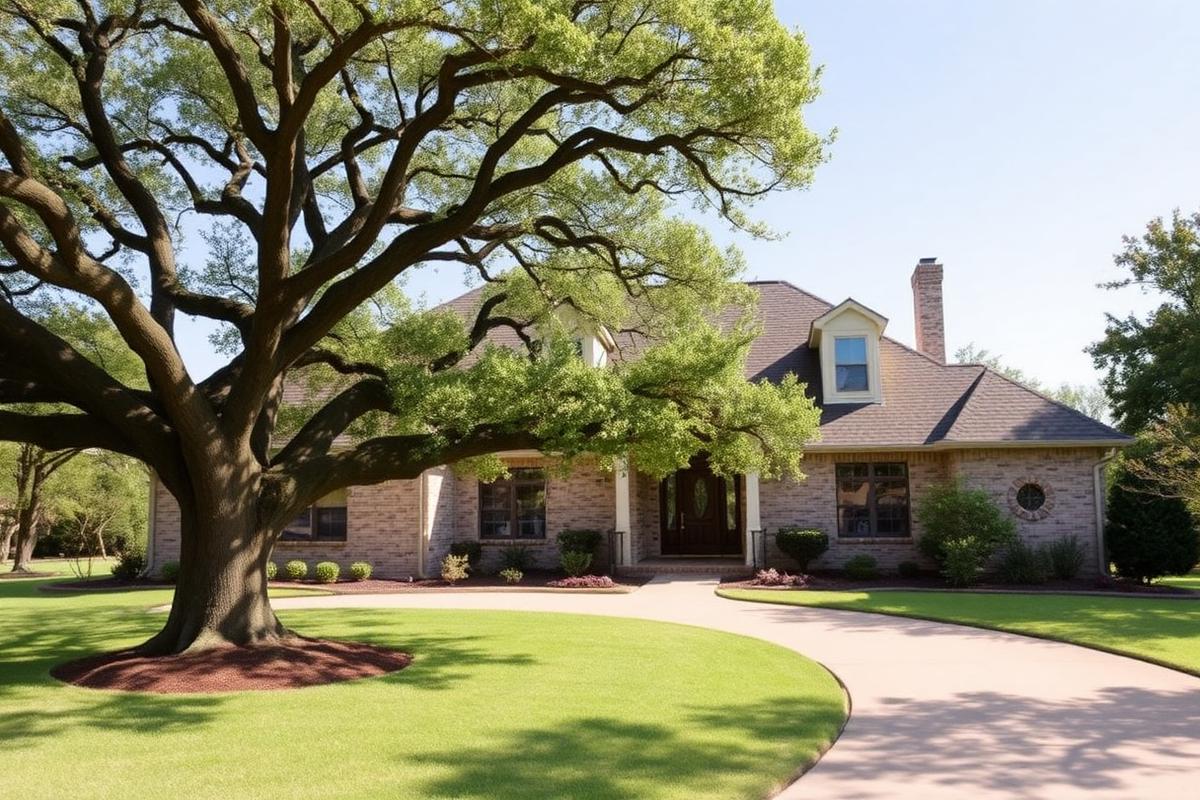
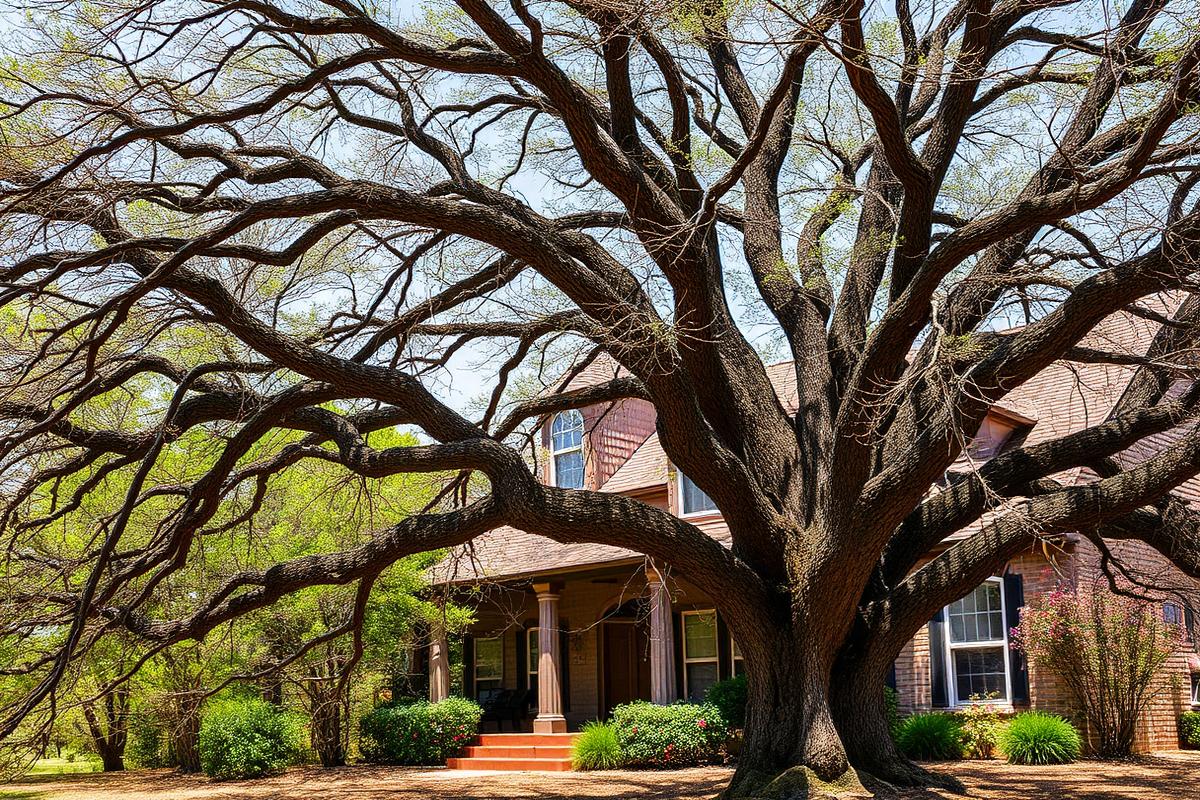
Austin is full of sprawling, multi-stemmed live oaks — the trees that define Tarrytown, Hyde Park, and West Lake Hills. Their beautiful spreading form is also their structural weakness: codominant stems and long horizontal limbs are exactly the shapes that fail under wind, ice, or their own weight.
Cabling and bracing supplements a tree's natural structure so a beloved specimen can stay standing instead of being removed.
Trees that are candidates for support systems
Support hardware is not for every tree. It is appropriate for structurally valuable trees with identifiable, correctable weak points and sound wood to anchor into.
A tree with extensive internal decay cannot hold hardware safely — in those cases reduction pruning or removal is the honest recommendation.
- •Codominant stems with a narrow V union and included bark
- •Visible crack or seam at a major union
- •Long, heavy horizontal limbs over a house, driveway, or patio
- •Historic or heritage tree you want to preserve
- •A limb that has already partially failed and can be saved
Our process
- 1
Structural evaluation
Arborist assessment of union geometry, wood soundness, and whether hardware is appropriate at all.
- 2
System design
Dynamic synthetic cabling for flexible support, or static steel cable and through-bolt bracing for cracked unions — chosen to ANSI A300 Part 3 guidance.
- 3
Weight reduction first
Selective end-weight reduction pruning almost always accompanies hardware; it reduces the load the system must carry.
- 4
Installation
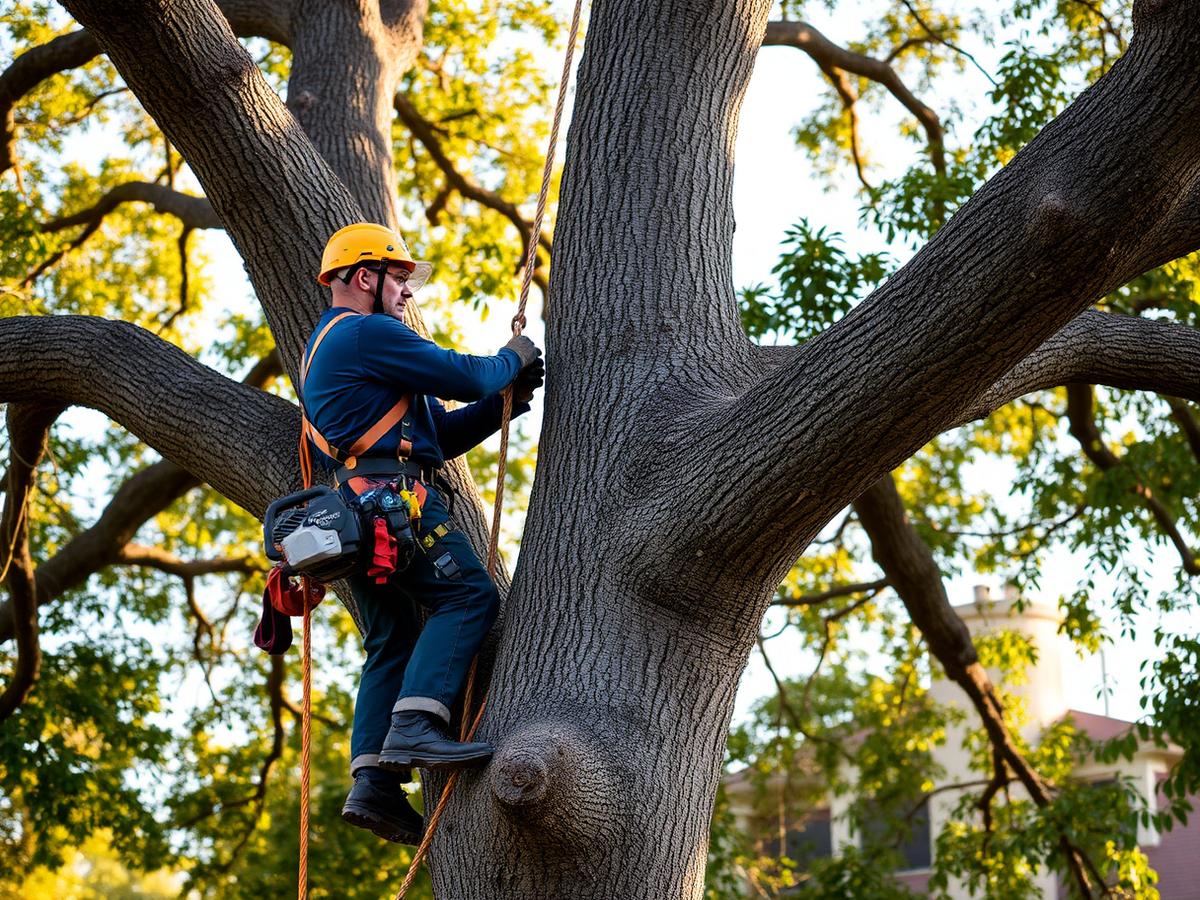
Placed at roughly two-thirds the distance from the union to the branch tips, installed by climbers without damaging cambium.
- 5
Inspection schedule
Systems are inspected every 1–3 years and after major storms; hardware has a service life and we track it.
Why Austin homeowners choose us
- ✓ANSI-standard installations by climbers who install support systems regularly, not occasionally
- ✓Honest gatekeeping: we decline hardware on trees where it would give false confidence
- ✓Combined with reduction pruning so the system is not doing all the work
- ✓Documented inspection intervals — we remind you when it is due
- ✓Decades of experience preserving Austin's heritage oaks
Local expertise
Live oaks account for the majority of cabling work in Austin, thanks to their multi-stemmed architecture and enormous lateral spread.
The February 2023 ice storm demonstrated the value of support systems: cabled trees across Northwest Hills and Allandale came through events that split their uncabled neighbors.
Heritage trees protected under City of Austin ordinance are often better candidates for preservation with hardware than for removal permitting.
What affects the price
| Number of cables/braces | A single cable is a short job; a multi-stem tree may need three or more plus bracing rods. |
|---|---|
| System type | Dynamic synthetic systems and static steel differ in material and labor. |
| Tree size and access | Height and canopy density drive climbing time. |
| Accompanying pruning | End-weight reduction is usually quoted with the install. |
| Inspections | Periodic re-inspection is a small recurring cost. |
Most cabling installations run $400–$1,500 depending on the number of cables, with bracing rods and reduction pruning quoted alongside.
Recent work
Frequently asked questions
Properly installed systems typically last 7–15 years, but they require inspection every 1–3 years and after major storms. Hardware is not permanent and can be outgrown.
Properly installed hardware causes minimal, localized wounding that the tree compartmentalizes. Improper installation — cables wrapped around limbs — causes girdling and serious damage.
Usually, yes — and it preserves the shade, property value, and character a mature tree provides. But it is only appropriate when the wood is sound.
No. It reduces risk substantially but does not eliminate it. That is why we pair hardware with weight reduction and scheduled inspections.
Get a free estimate from a certified arborist
Straight answers, fixed pricing, and crews that clean up like they were never there.
Since 1975Fully insuredCertified arborists